
Can Your AI Remember? Here’s Why Memory is the Key to LLM
In today’s digital world, conversational AI — like agents, chatbots, and virtual assistants — plays a crucial role across various industries. From customer service to healthcare, these tools are transforming how businesses interact with clients and stakeholders. However, a common challenge they face is maintaining memory throughout interactions. This article explores why memory is essential in conversational AI and how implementing it can enhance user experiences across different sectors.
Why Memory Matters in Conversational AI
Imagine talking to someone who forgets everything you say immediately after you say it. Frustrating, right? Just as humans rely on memory to have meaningful conversations, AI systems need memory to provide coherent and relevant responses.
Human Memory vs. AI Memory
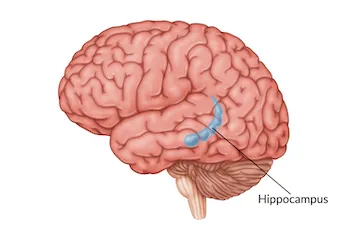
- Human Memory: Our brains, especially the hippocampus, store and recall information, allowing us to have smooth and connected dialogues.
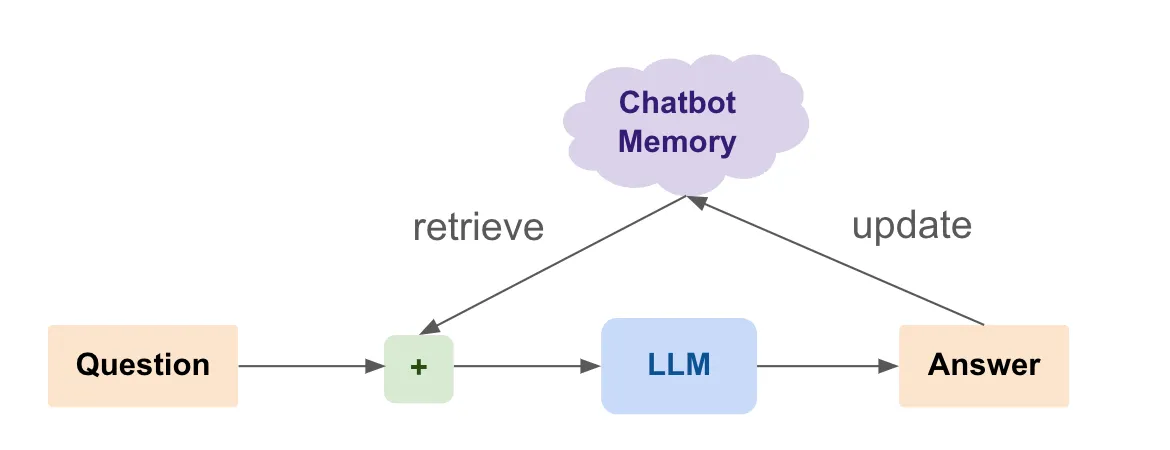
- AI Memory: Without proper memory mechanisms, AI interactions become disjointed, leading to user frustration and inefficient communication.
The Impact of Memory on User Experience
Let’s look at examples that highlight how memory affects AI interactions.
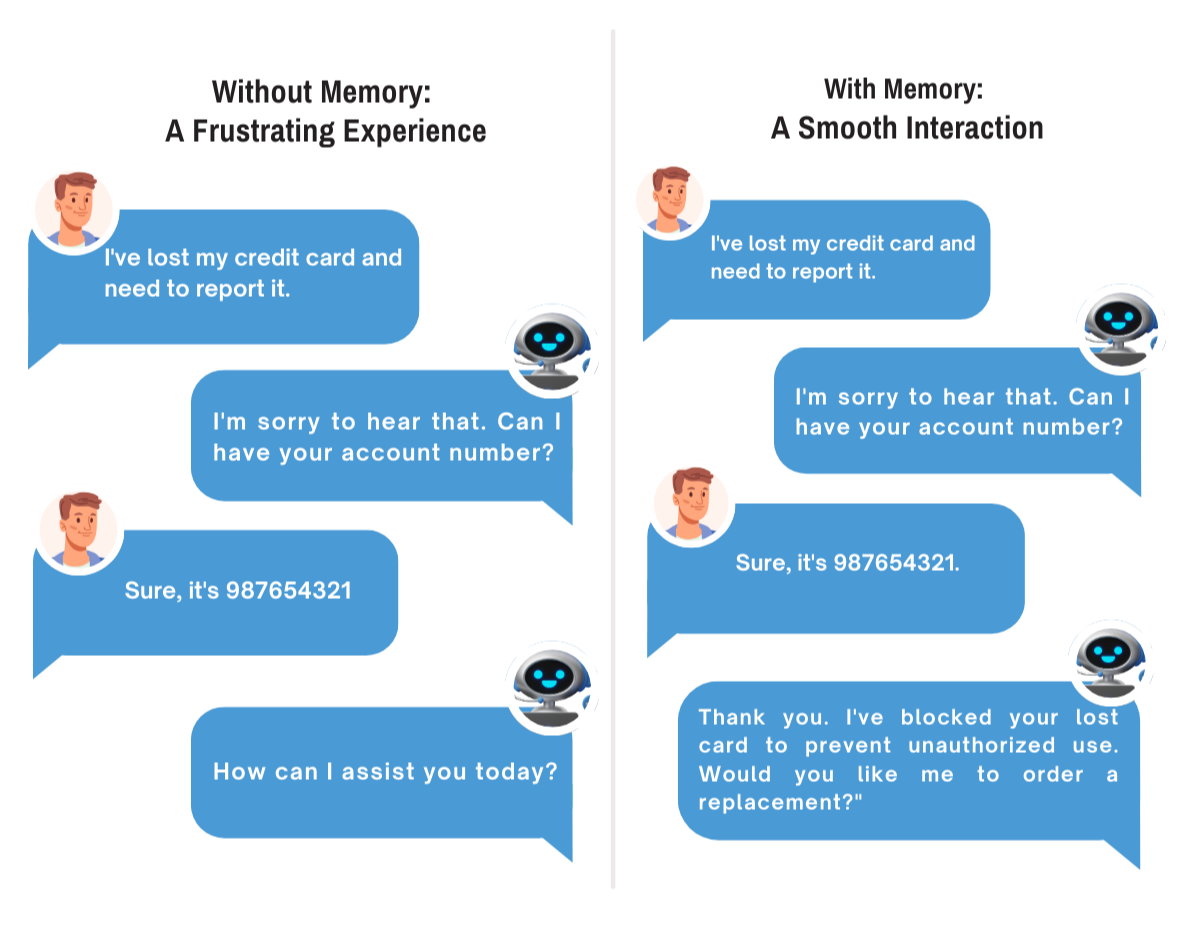
Without Memory: A Frustrating Experience
Problem: The AI forgets the initial concern, forcing the user to repeat themselves.
With Memory: A Smooth Interaction
Benefit: The AI remembers the issue and provides a relevant solution, enhancing user satisfaction.
Techniques for Implementing Memory in AI Agents
Implementing memory in AI involves several strategies that can be customized to fit different industry needs.
1. Short-Term Memory
Short-term memory keeps track of the conversation within a single session by remembering recent exchanges.
👉For example, when a user says, “Book me a flight to New York,” the AI remembers “New York” and asks, “Sure. When would you like to travel?”
2. Long-Term Memory
Long-term memory retains information across multiple sessions by storing user data and preferences in a database.
👉For instance, if a user returns weeks later and says, “I need a hotel in New York,” the AI recalls past preferences: “Welcome back! Last time, you preferred hotels in Midtown. Shall I find similar options?”
3. Contextual Summarization
Contextual summarization involves summarizing key details from previous interactions to inform responses without overwhelming the system.
👉For example, if a user requests, “Order the same coffee as yesterday,” the AI summarizes prior orders and responds, “Sure, a grande latte with almond milk is on its way!”
4. Metadata Tagging
Metadata tagging personalizes interactions based on user history by tagging conversations with details like preferences and past behaviors.
👉For example, when a user asks, “Recommend a movie,” the AI can say, “You enjoyed ‘Inception’ last time. How about ‘Interstellar’?”
Applying Memory Across Industries
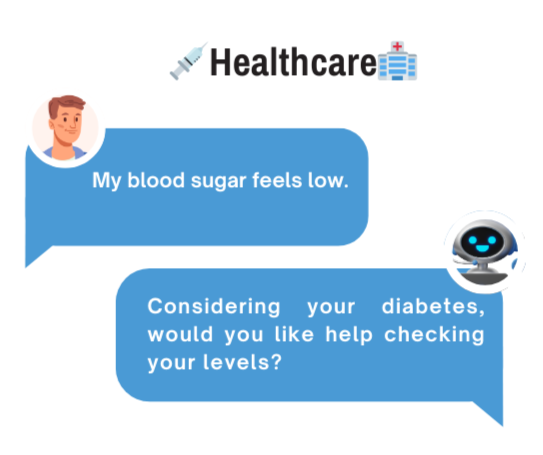
Healthcare
In healthcare, AI can remember a patient’s medical history to provide personalized advice.
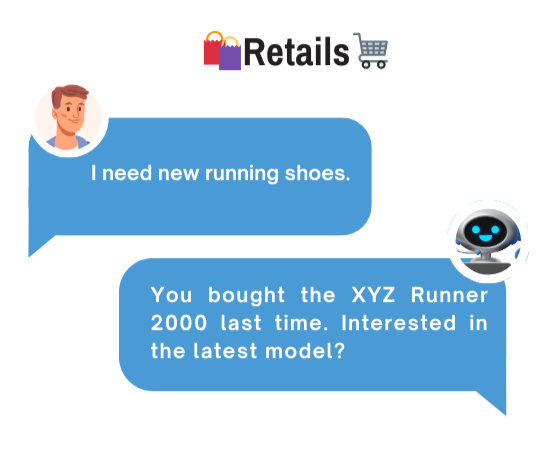
Retail
In retail, AI Agents can enhance online shopping by recommending products based on past purchases.
Education
In education, virtual assistants can track a student’s progress to tailor future lessons.

Best Practices for Maintaining Memory in AI Agents
Utilize Databases Effectively
Storing user interactions in databases ensures easy access to past conversations, perfect for maintaining long-term memory and personalized experiences.
Implement Stateful APIs
Stateful APIs track conversation flow within a session, enabling smooth short-term memory for more cohesive exchanges.
Develop Smart Algorithms
Tailored logic can help the AI interpret and manage context, keeping conversations relevant and on-point throughout.
Introducing Epsilla’s Advanced Memory Settings
Now that we’ve explored the importance and limitations of memory in conversational AI, let’s see how Epsilla bridges this gap. Epsilla offers advanced settings that let you fine-tune your chat agent’s memory capabilities, ensuring it maintains context and delivers coherent, relevant responses tailored to your needs.
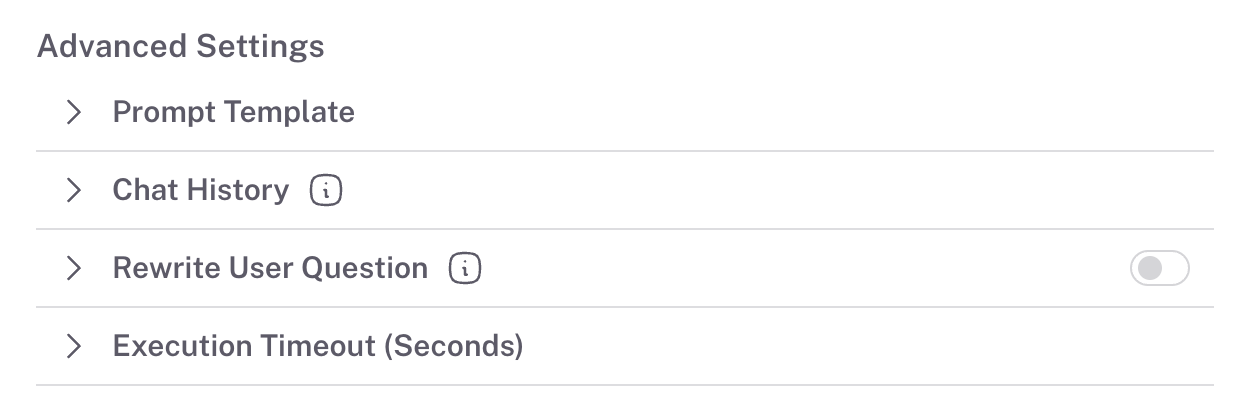
1️⃣Prompt Template
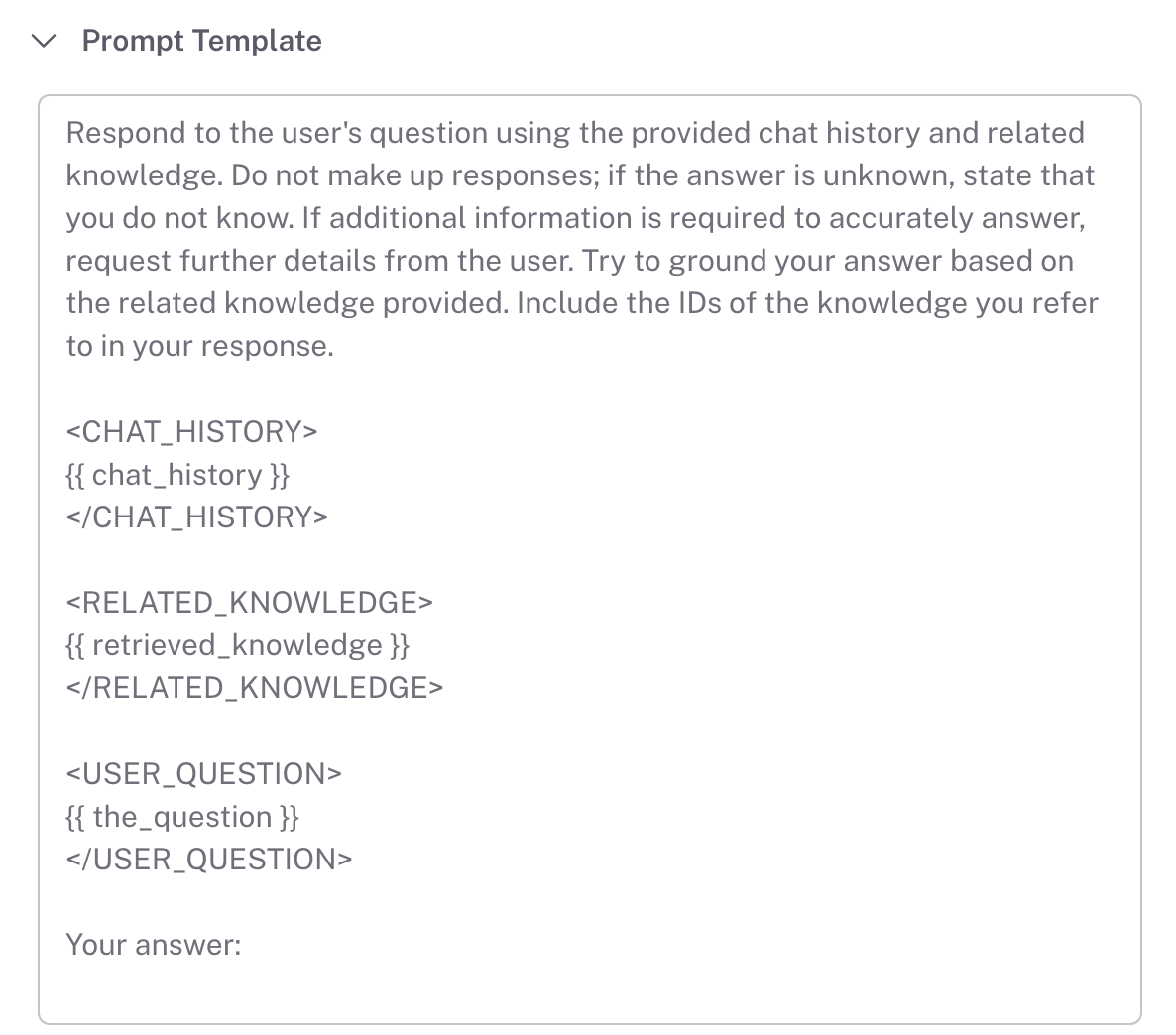
The Prompt Template controls how the chat agent formulates its responses. It provides context based on both the chat history and related knowledge retrieved by the chat agent. The template includes placeholders like , , and to ensure the chat agent delivers grounded responses based on the user's context.
For example, a Prompt Template might look like:
2️⃣Chat History Setting
This setting defines how much of the previous conversation is remembered. You can choose the number of recent messages (referred to as “Most Recent Rounds”) that the agent remembers — typically set to 5 rounds by default.
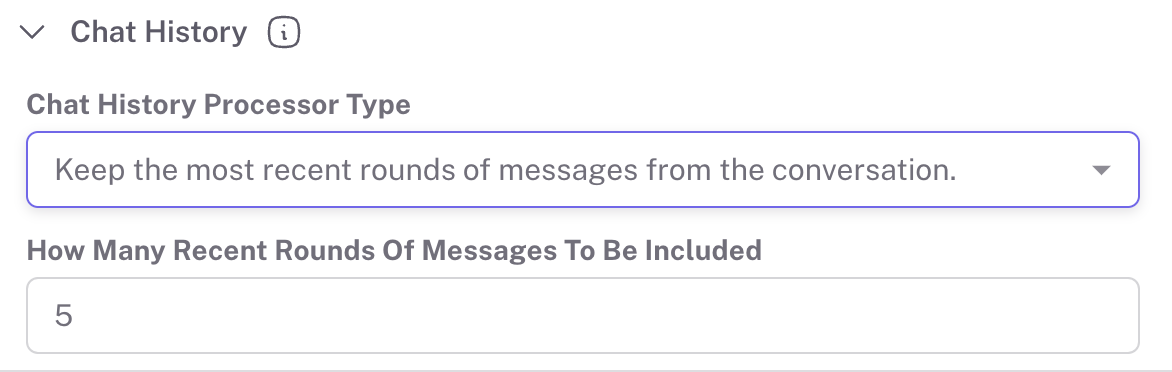
- Most Recent Rounds: The agent recalls the last few exchanges in a conversation, which is the basic memory function. However, a limitation is that it can only remember recent rounds, and increasing the number could make the prompt too lengthy, potentially affecting performance.
✨Future Options: Epsilla is introducing more advanced capabilities, such as summarizing conversations or retrieving the most semantically relevant rounds, providing even more flexibility in how memory is managed.
📒 Case Study: Sociology Review Session
Let’s explore how these settings impact a real-life use case — a sociology review session where the user asks the chat agent to define and compare concepts from their study material.
Scenario: Asking Definitions of “Personal” and “Blended Family”

🔎 Follow-Up Query:
User: “Can you compare the differences between a personal family and a blended family?”
- AI (with 1 Round Setting):

- AI (with 5 Rounds Setting):

❓Memory Comparison:
- 1-Round Setting
When the chat history is set to 1 round, the AI only remembers the most recent interaction. It doesn’t have access to the previous definitions of “personal family” and “blended family” and, therefore, asks the user to clarify which aspects they want to compare. This shows the limitation of a reduced memory setting where context is lost quickly.
- 5-Round Setting:
With 5 rounds of chat history, the AI retains both definitions provided earlier. It uses this context to automatically generate a comparison, resulting in a more fluid and satisfying user experience. The agent understands the user’s intent without needing additional clarification, as it has access to more of the conversation history.
Practical Implications of Epsilla’s Memory Settings
By adjusting the chat history setting, users can control how much context the AI remembers, significantly affecting the quality and depth of interactions. For straightforward or transactional exchanges, a 1 round memory setting might suffice, but for more complex, ongoing conversations — like educational reviews, customer service queries, or financial analysis — the 5 round setting or more advanced options like summarization would be ideal.
Limitations of Basic Memory Options:
- While remembering recent rounds ensures relevant context, it can also result in longer prompts, which may slow down response times or reach system limitations.
- Advanced Memory Options (Coming Soon): To mitigate this, features like conversation summarization and retrieving the most semantically relevant messages will allow for more sophisticated context retention without bloating the prompt length.
📮Epsilla is introducing new features that would improve memory abilities, providing even more control over your chat agent’s behavior.
Learn More: For detailed documentation on advanced settings, visit the Epsilla Documentation.
Conclusion
Incorporating memory into conversational AI isn’t just a technical upgrade — it’s essential for meaningful and efficient user interactions. By implementing memory, businesses across all industries can boost customer satisfaction, foster loyalty, and stand out in a competitive market.