
The Flawed Question Investors Keep Asking
I was recently asked by an investor, "What specific job-to-be-done does a framework like OpenClaw solve?"
This is a fundamentally flawed question. It's a classic case of applying an old framework to a new paradigm, a "digital twin" fallacy that misinterprets a revolution as a mere iteration. It’s akin to asking in 1995 what specific office task Linux solves. The question misses the point entirely.
The Jobs-to-be-Done (JTBD) framework served us well in the SaaS era. It provided a logical standard for value creation: humans hire a product to accomplish a task. We needed to write code, so IDEs were born. We needed to analyze data, so we built spreadsheets and BI tools. This model was the bedrock of software investing for two decades.
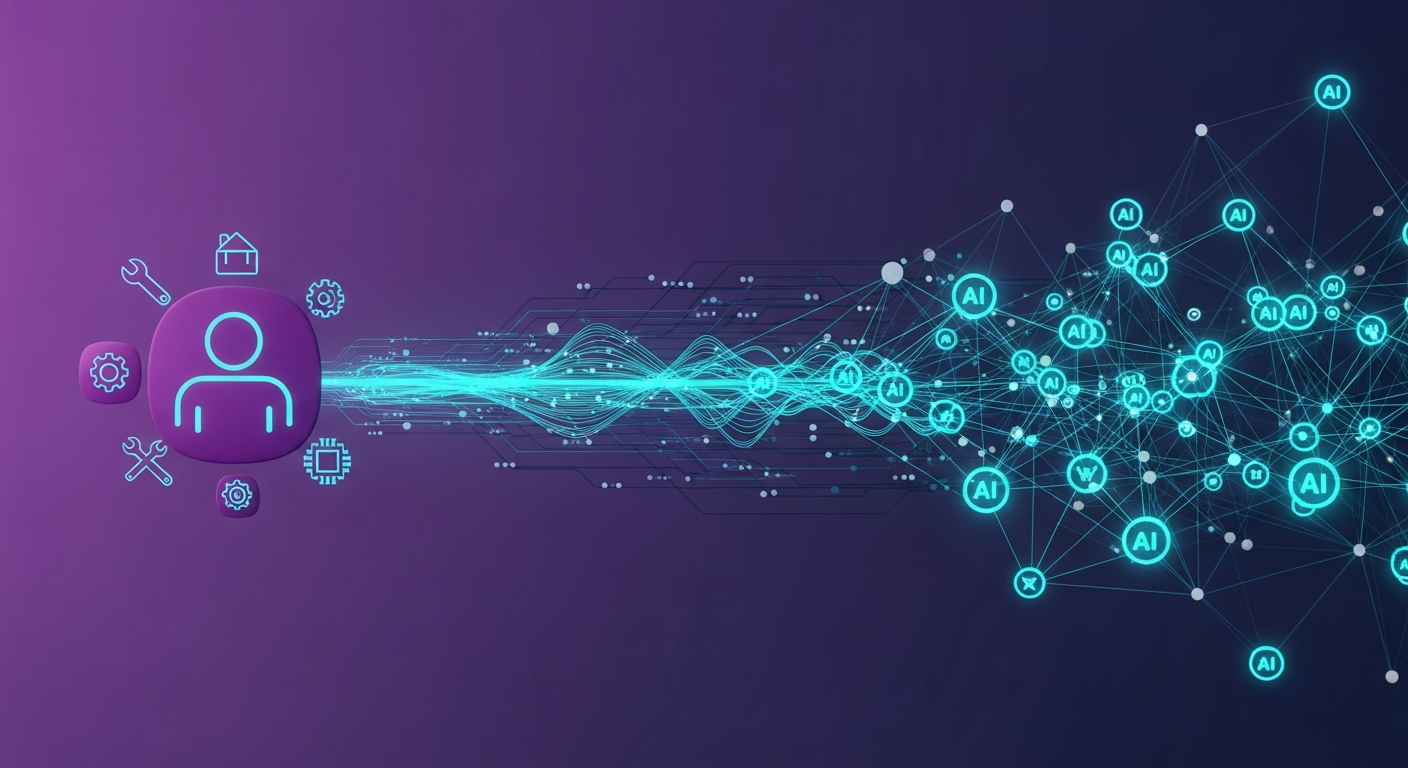
That era is over. Frameworks like OpenClaw signal a paradigm shift where the fundamental user is no longer human. The user is the Agent.
When Jerry Murdock of Insight Partners stated that "Cursor is already obsolete," he wasn't critiquing its technical execution. He was declaring the entire frame of reference—AI assisting a human programmer—as a transitional phase. While one company celebrates a 30% productivity boost for human developers, another is building an autonomous software factory that requires zero human programmers.
This isn't a distant future. Look at the real AI-native startups—companies like E2B, Eventual, and Lotus AI. They are not "assisting" their developers. They are deploying autonomous agents to write production code now.
To ask about the JTBD for an autonomous agent is to fundamentally misunderstand its purpose. You don't ask about the JTBD of an enabling layer like Linux; you recognize it as the infrastructure that makes an entire economic explosion possible.
The User Has Changed: From Tool Logic to Survival Logic
The critical distinction is one of intent and dependency.
- A Human User operates on Tool Logic: "I need this tool to help me complete a task."
- An AI Agent operates on Survival Logic: "I need this capability to be viable and execute my directive." A human can tolerate a learning curve, work around a buggy feature, or manually compensate for a tool's deficiencies. An autonomous agent cannot. If an agent deployed with OpenClaw cannot perform a reliable web search, it is not merely "inconvenienced." It is crippled. The system fails. This is not a "missing feature" problem; it is a viability problem. The value of incorporating a "Skill" like code review or data retrieval is not measured by the human problem it solves directly. Its value is measured by its impact on the agent's operational success rate. We are witnessing demonstrable cases where injecting external, specialized skills can elevate an agent's task completion rate from a non-viable 20% to a functional 70% or higher. The logic has inverted. We are no longer building better tools for people. We are building baseline survival capabilities for agents.
The "Claw" Tech Stack: The New LAMP for an Agentic World
The investment metrics of the SaaS world—TAM, pain points, 10x improvements—are obsolete for evaluating agentic infrastructure. They must be replaced with a new set of questions:
- From TAM to Criticality: How critical is this capability to an agent's survival? Without it, does the agent's operational viability collapse?
- From Pain Point to Measurability: Can the improvement provided by this capability be quantitatively measured and benchmarked? Instant, empirical feedback on performance is the new validation.
- From 10x Better to Composability: Can this capability be reused, learned, and composed by other agents, creating a network effect of escalating competence? This points to the emergence of what Murdock calls a "Claw Tech Stack," the modern successor to the LAMP (Linux, Apache, MySQL, PHP) stack that democratized web development in the early 2000s. The LAMP stack provided a standardized, open-source infrastructure that catalyzed an explosion of web applications by drastically lowering the cost and complexity of building them. The most critical component of this new Claw stack is the orchestration layer. This is the system that enables an agent to dynamically select and schedule different foundation models, choose from a toolkit of capabilities, and intelligently allocate computational resources. It is the central nervous system of the agent economy.
The Epsilla Perspective: Orchestrating the Enterprise Agent Economy
The transition from a human-centric SaaS model to an "Agent-as-a-User" model is not a theoretical exercise. It represents a fundamental architectural rift that will redefine enterprise software. Enterprises will not deploy one monolithic agent; they will deploy swarms of specialized, autonomous agents to execute complex workflows.
This is where Epsilla is positioned.
If the new "user" is an Agent, then the critical infrastructure required is not a user-friendly UI, but a robust, scalable orchestration layer. The enterprise doesn't need another SaaS tool; it needs an operating system for its agent workforce.
Epsilla is building that orchestration layer for the new agentic stack.
Our focus is not on building a single agent to do one job. It is on providing the enterprise-grade infrastructure that allows a multitude of agents to operate, coordinate, and scale. We are building the skill-routing, observability, and governance systems necessary for these autonomous agents to "survive" and thrive within complex corporate environments.
The challenge is no longer about making humans more productive. It is about creating an environment where a workforce of agents can be deployed reliably and efficiently. We are building the foundational infrastructure for the next generation of software—software that is not merely used by agents, but is the agent.
The tsunami is forming. Arguing about its specific "job-to-be-done" from the safety of the beach is a fatal miscalculation. The time to build for the new high ground is now.